Japan has a startup trying to burn nuclear waste
A Japanese startup wants to use particle accelerators and liquid lead-bismuth to tackle long-lived nuclear waste. The engineering challenge is enormous.

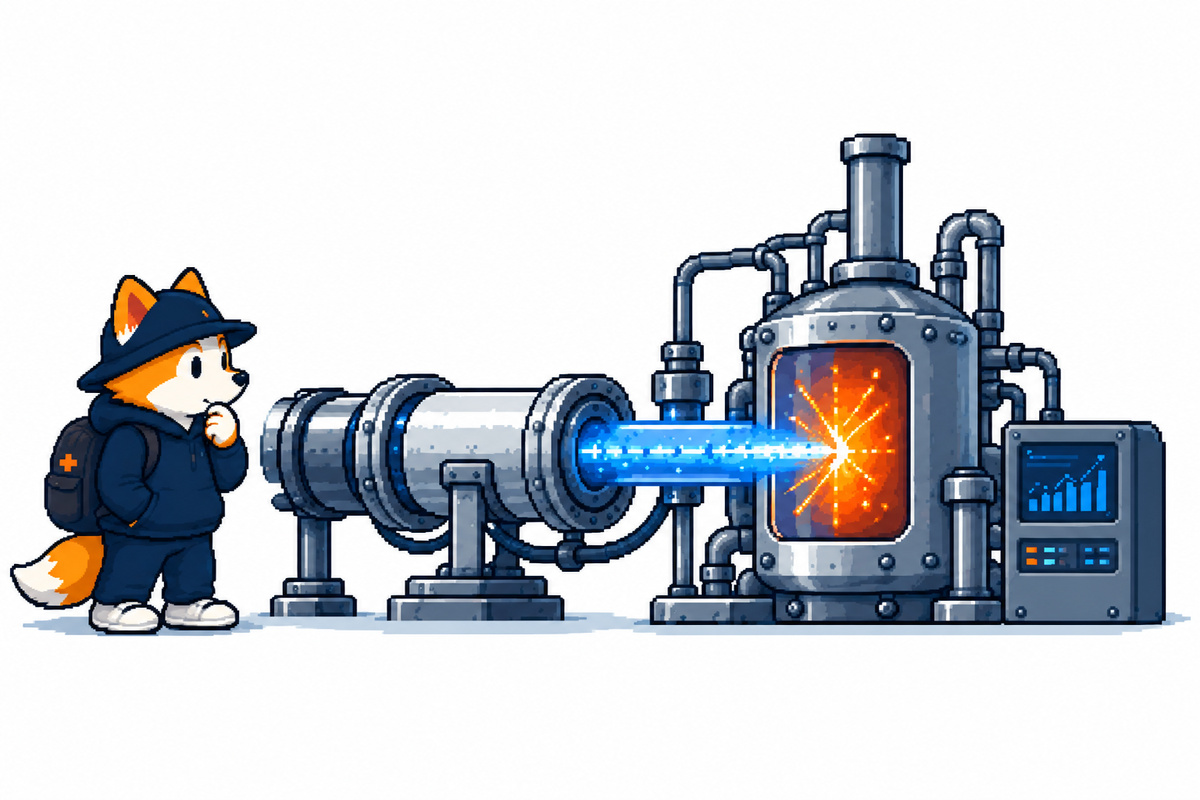
Lead accel wants to use a particle accelerator and liquid metal to tackle some of nuclear power’s longest-lived waste. The physics is decades old. The attempt to turn it into a small commercial system is not.
One of the radioactive elements found in nuclear waste, neptunium-237, has a half-life of about 2.14 million years. Lead accel explains how it hopes to use nuclear reactions to transform neptunium and other long-lived elements.
A tiny university spinout founded in 2025 wants to build a machine that could deliberately turn elements like this into something easier to deal with.
The machine is called an accelerator-driven system, or ADS. It would fire high-energy protons into liquid lead-bismuth, producing neutrons that can trigger nuclear reactions in some of the particularly troublesome radioactive elements separated from spent nuclear fuel.
The goal is not to make nuclear waste disappear. It is to force some of its longest-lived elements through nuclear reactions rather than waiting for them to decay naturally.
Lead accel puts it rather more memorably: “Burn the world’s nuclear waste.”
A strange way to deal with nuclear waste
An ADS is easiest to understand as several difficult technologies stitched together.
It starts with a particle accelerator. High-energy protons are fired into a target made from lead-bismuth eutectic, a mixture of two metals that becomes liquid at around 125°C. When the protons strike nuclei in the liquid metal, they knock out large numbers of neutrons through a process called spallation.
Those neutrons feed a nuclear reactor containing fuel rich in minor actinides, a group that includes neptunium, americium and curium.
There is an important difference from a conventional reactor. The core is deliberately subcritical, meaning it cannot sustain its chain reaction by itself. It depends on the accelerator-generated neutrons to keep the reaction going.
That makes it possible to design a reactor specifically for transmuting high concentrations of minor actinides. Some undergo fission; others are transformed through neutron capture and subsequent nuclear reactions.
The basic idea is to deliberately change some of the long-lived radioactive nuclei rather than simply store them and wait.
What does “several hundred years” actually mean?
This is where descriptions of ADS can become misleading.
JAEA, the Japan Atomic Energy Agency, has studied ADS as part of a much broader system called partitioning and transmutation. Minor actinides would first have to be separated from high-level radioactive waste, manufactured into specialised fuel, irradiated inside the ADS and potentially recovered and recycled through the system again.
If that whole process can be made to work, JAEA estimates that the time required for the remaining waste’s radiotoxicity to fall to the level of natural uranium ore could potentially shrink from tens of thousands of years to several hundred years.
That is an extraordinary difference, but it does not mean neptunium-237 suddenly acquires a 300-year half-life. Its half-life remains about 2.14 million years. The aim is to transmute much of it instead of waiting for it to decay naturally.
Nor can an ADS simply swallow old fuel rods. Separation, specialised fuel fabrication and recycling are all part of the proposed system, and radioactive material would still remain for disposal afterwards.
ADS is therefore better understood as a possible way of making one particularly difficult part of the nuclear-waste problem more manageable, not making the problem disappear.
The idea is much older, and much bigger, than Lead accel
Lead accel did not invent ADS.
JAEA has been developing its own concept for decades. One reference design combines a 30 MW proton beam with an 800 MW thermal subcritical reactor, intended to transmute roughly 250 kilograms of minor actinides produced annually by about ten 1 GWe nuclear power plants. JAEA's published research gives some sense of the scale involved.
Belgium's MYRRHA project provides an even more tangible comparison. It is being developed around a 600 MeV proton accelerator and lead-bismuth-cooled subcritical reactor. MYRRHA says the completed linear accelerator will extend for roughly 400 metres.
There is also already a private company trying to commercialise broadly similar physics. Switzerland's Transmutex is developing an accelerator-powered subcritical system for nuclear-waste transmutation and energy production. Independent work with Switzerland's Paul Scherrer Institute confirms that Transmutex is developing accelerator-driven reactor technology for transmuting long-lived nuclear waste.
So Lead accel is neither inventing ADS nor alone in trying to commercialise it.
Its proposition is narrower and, for now, much less proven: founder Masatoshi Kondo believes more than 20 years of Japanese research into the difficult liquid-metal engineering inside these machines can help create a smaller, economically viable ADS.
The problem with hot liquid metal
Lead-bismuth is unusually useful inside an ADS. It can serve as the target that produces the neutrons and also as coolant carrying heat away from the reactor. It transfers heat well, has a high boiling point and does not readily absorb the neutrons needed elsewhere in the system.
Unfortunately, circulating hot liquid metal through machinery for years introduces a fairly fundamental requirement: the machinery has to survive it.
Lead-bismuth can attack structural materials through corrosion and dissolution, while its chemistry has to be carefully controlled. These are not details to sort out once somebody has finished the interesting nuclear physics. They are part of whether an ADS can operate reliably at all.
This happens to be Kondo's field.
He completed his doctorate at Tokyo Tech in 2006, almost two decades before the university merged with Tokyo Medical and Dental University in 2024 to become the Institute of Science Tokyo. Lead accel's founder profile describes his doctoral research as studying changes in steels and ceramics in flowing lead-bismuth and chemical control of the liquid alloy.
His work on the problem goes back even further. Research records from the early 2000s show Kondo working on lead-bismuth circulation loops, oxygen sensors, corrosion and pumps.
More than twenty years later, he has founded a company around one of the most demanding possible applications of that expertise.

A protective layer that grows back
A recent experiment gives a good sense of what this research actually looks like.
Kondo and researchers from JAEA tested an iron-chromium-aluminium alloy known as FeCrAl in flowing lead-bismuth at about 450°C. After an initial 2,000 hours, they deliberately removed part of the protective oxide layer before returning the material to the loop for another 2,000 hours.
The protective layer formed again over the damaged area.
The underlying 2026 research paper describes the reformation of these protective oxide layers during the 4,000-hour experiment, while JAEA describes the behaviour as a self-healing function.
That term needs some care. The alloy was not repairing a cracked reactor wall. Under the controlled chemical conditions of the experiment, its protective surface oxide regenerated after being deliberately removed.
It is nevertheless a useful result. Maintaining the right oxide layer is one way of preventing the structural material underneath from being continuously attacked by lead-bismuth.
It also illustrates how far an interesting materials result remains from an actual reactor. The next questions include whether full-sized components such as pumps can survive and operate reliably, and eventually whether all of these components can be assembled into a functioning ADS.
From twenty years of research to Room 306
Before Lead accel existed, Kondo's project was selected for the Greater Tokyo Innovation Ecosystem, or GTIE, a university commercialisation programme.
The published GTIE plan is revealing. It proposes a compact accelerator-driven nuclear transmutation system, initially using numerical simulation to design a system that could combine minor-actinide transmutation with sufficient energy efficiency. Alongside the reactor work, it calls for development of structural materials and thermal-fluid equipment using the university's liquid-metal expertise.
The plan is long term. It talks about raising the technology readiness needed for detailed ADS design over roughly ten years and building a mock-up plant within that period.
Kondo incorporated Lead accel on 8 August 2025. In December, the company announced a ¥60 million seed investment from ANRI-GREEN1.
There is still a large hole in the public story, however. Lead accel has not disclosed the intended thermal output of its proposed reactor, the size or power of its accelerator, how much waste a commercial machine could process or what it might cost.
So “compact and economical” should be treated as the company's objective, not an achievement.
An ADS also requires much more than liquid-metal expertise. Accelerator technology, reactor physics, specialised nuclear fuel, materials, pumps, heat exchangers and thermal-fluid systems all have to work together.
The company is starting from somewhere considerably smaller.
On its website is a photograph taken just after it rented a fixed desk in Room 306 of the Institute of Science Tokyo's Campus Innovation Center. Kondo calls it Lead accel's “zero point”, borrowing the accelerator term for the point where proton acceleration begins.
What would change the story?
The most important thing to watch is whether Lead accel starts putting numbers around the word compact.
How powerful will the accelerator be? How large will the reactor be? How much minor-actinide waste could one system process? What would it cost? And how do those numbers compare with the much larger ADS concepts that already exist?
Then there are the engineering milestones. The FeCrAl experiment needs to move towards full components and much longer operating conditions. The accelerator has to provide the powerful, highly reliable beam an ADS requires. The specialised fuel cycle needed to separate, manufacture and recycle minor actinides also has to exist around the reactor.
On 28 July 2026, Kondo presented work on ADS to Japan's Atomic Energy Commission. That establishes that the subject is being discussed at a national policy level; it does not mean the Commission has endorsed Lead accel or committed to its technology.
For now, the most interesting thing about the company is much earlier than that.
Lead accel is taking a technology studied for decades by national laboratories and asking whether a very specific body of Japanese expertise in liquid metals can help turn it into something smaller and commercially buildable.
There isn't enough evidence yet to know whether it can.
But there is now a company trying.
The rabbit hole: meet OLLOCHI
The FeCrAl experiment took place inside a piece of equipment with an excellent name.
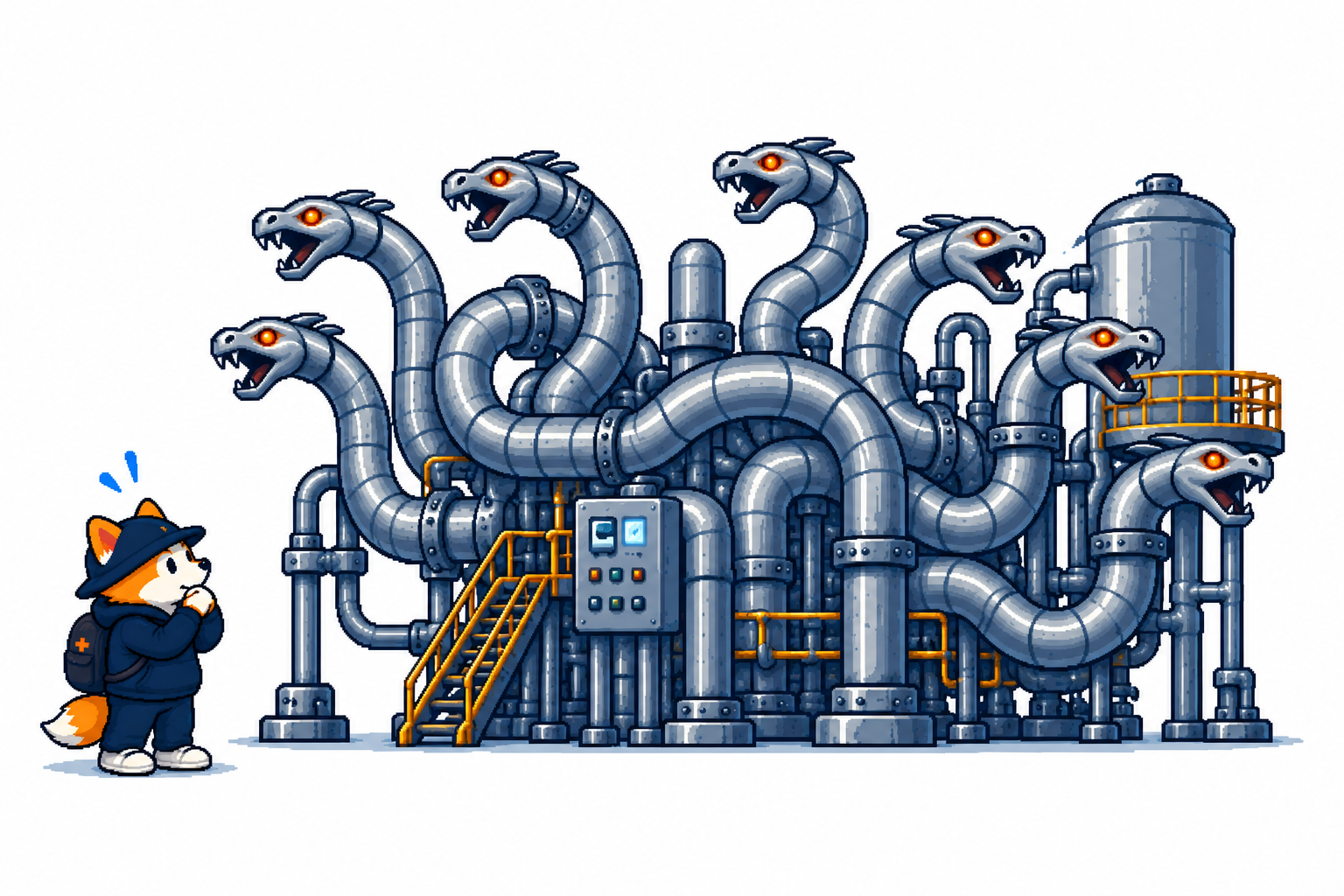
At JAEA's Nuclear Science Research Institute in Ibaraki sits a large circulating liquid-metal test loop called OLLOCHI: Oxygen-controlled LBE LOop for Corrosion tests in HIgh-temperature.
The name is also a play on Yamata no Orochi, the eight-headed serpent from Japanese mythology. JAEA explains that the researchers thought its multiple test sections and twisting main pipe looked like the creature.
OLLOCHI allows hot lead-bismuth to circulate while researchers control things such as temperature, flow and dissolved oxygen. The oxygen is surprisingly important. The aim is to maintain conditions that allow protective oxide layers to form on structural materials without allowing the lead-bismuth itself to oxidise excessively.
It is an oddly physical way into the wider world behind Lead accel. The headline problem is radioactive material that can remain hazardous over geological timescales.
One of the problems underneath it is figuring out how to stop a pipe full of hot liquid metal from eating itself.
Sources & Further Reading
Lead accel
The company's own explanation of its ADS concept and ambitions. Its About page also has Kondo's background and the Room 306 “zero point” story. Descriptions of the company's future technology should be read as company claims rather than demonstrated performance.
Greater Tokyo Innovation Ecosystem (GTIE)
Probably the most useful source for understanding what Kondo actually proposes to build. The project page predates Lead accel's incorporation and describes the compact-ADS concept, liquid-metal work and ten-year development ambition.
Japan Atomic Energy Agency (JAEA) — partitioning and transmutation
A useful introduction to why Japan has been researching ADS and the basis for the estimate that partitioning and transmutation could reduce the period for waste radiotoxicity to reach natural-uranium levels from tens of thousands to several hundred years.
JAEA — reference ADS research
Useful for understanding how large established ADS concepts can be: the reference design described here has an 800 MW thermal core, 30 MW proton beam and roughly 250-kilogram annual minor-actinide transmutation target.
JAEA — FeCrAl and OLLOCHI
The primary institutional account of the 2026 materials result, the lead-bismuth corrosion problem and the wonderfully named OLLOCHI test loop.
Corrosion Science — FeCrAl research paper
The underlying peer-reviewed paper on the reformation of protective oxide layers after deliberate abrasion during long-duration exposure to flowing lead-bismuth.
MYRRHA
Useful global context for what a major accelerator-driven system looks like. Its planned 600 MeV linear accelerator will eventually be roughly 400 metres long.
Paul Scherrer Institute — Transmutex
A useful independent source on another private-sector attempt to develop accelerator-driven nuclear transmutation, providing some context for what is and isn't unusual about Lead accel.